
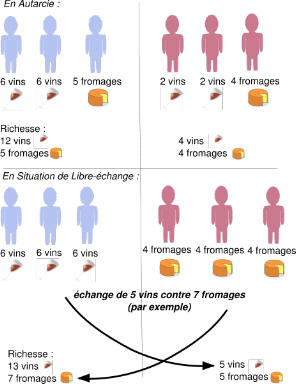
 One of the most commonly preached mantras about the current economic system is that it will “bring wealth to everyone”. This, put politely, is a huge steaming pile of horse manure.
Wealth isn’t an absolute measure which will, say, always be three feet long. It’s a comparative measure which is defined by being over a certain percentage above the average.
So “wealth for all” is a contradiction in terms. We can’t all be wealthy because then we’d all be average, which by definition isn’t wealthy.
The mechanism which is supposed to bring this miraculous wealth to everyone is equally suspect: an ever upward spiral in the value of assets.
Value is only meaningful to two parties: a buyer and a seller. If a buyer values something more than a seller then a trade is completed. The flipside of this is that the asset has to have somehow declined in value in the seller’s estimation otherwise they would never have bought it in the first place.
Assets do not permanently increase in value, they go up and down according to personal circumstance and fashion (and not a lot else). So an economy which is based on the premise that everyone’s a winner is doomed to fail.
Don’t get me wrong, I’m all in favour of the market, recognise the need to trade and understand the creation and delivery of goods and services. However, as Joe Sibilia, President of CSRwire, recently observed:
“Private property is accepted as being a self evident right. Economic activity that benefits all the stakeholders affected (social and environmental) is a self evident right.”
If we’re going to create a sustainable economic architecture we need to be realistic about wealth and value, not live in some cloud-cuckoo land where everyone drives the most expensive car and only owns shares in the most profitable company.
To achieve this we must have courage and scrutinise the one thing which underpins capitalism: Money. More on that next week.
In the meantime, feel free to post your comments below or start a thread on the Green Options Discussion Forum. It’s a pleasure to hear from you and I always look forward to hearing views other than my own!
Related posts:
To Bailout or Not to Bailout: Is Free Market Economics Sustainable?
Green Books – “Common Wealth” by Jeffrey Sachs
Ending Global Poverty? Seriously?
Picture Credit: “Avantage comparatif” by Aliesin from Wikimedia Commons under Creative Commons Attribution Sharealike Licence.
[social_buttons]

The goal of spreading wealth should never be understood as everyone living in 2 story homes and driving fancy cars, but rather the idea of increasing the standard of living for the bottom 1/6 of the worlds population making less then $1/day. But even to accomplish this, you are exactly correct, the first objective is to understand wealth is not an absolute and understand the mutually beneficial relationships of buyers and sellers.
The goal of spreading wealth should never be understood as everyone living in 2 story homes and driving fancy cars, but rather the idea of increasing the standard of living for the bottom 1/6 of the worlds population making less then $1/day. But even to accomplish this, you are exactly correct, the first objective is to understand wealth is not an absolute and understand the mutually beneficial relationships of buyers and sellers.
Hi Bo — great comment, thank you for continuing the discussion!
I look at this mathematically. If the people on the lowest wages get an increase in income, all that will happen is that the average wage will move away from them.
They may become Western consumers and acquire more stuff, but they will remain at the bottom of the heap.
Best wishes — Chris.
Hi Bo — great comment, thank you for continuing the discussion!
I look at this mathematically. If the people on the lowest wages get an increase in income, all that will happen is that the average wage will move away from them.
They may become Western consumers and acquire more stuff, but they will remain at the bottom of the heap.
Best wishes — Chris.
The definition of wealth is “An abundance of valuable material possessions or resources; riches” which makes no reference, as this post suggests to a “measure which is defined by being over a certain percentage above the average.” I would suggest wealth is measured as the amount of value above what is necessary. E.g. a population which has difficulty feeding itself is not wealthy, while a population that can afford luxury items has at least some amount of wealth.
America has certainly created a great deal of wealth in the past decades as the concept of hunger or homelessness has increasingly become a distant, inconceivable concept to the vast majority of it’s citizens. If my neighbors or fellow citizen’s salary increases outpace my own, that in no way makes me less wealthy (so long as my salary increase outpaces inflation). In fact, that places the tax burden more on them, than I. For those reasons, I feel that “bring wealth to everyone” is a noble, and achievable goal for current economic system; not a contradiction in terms.
The definition of wealth is “An abundance of valuable material possessions or resources; riches” which makes no reference, as this post suggests to a “measure which is defined by being over a certain percentage above the average.” I would suggest wealth is measured as the amount of value above what is necessary. E.g. a population which has difficulty feeding itself is not wealthy, while a population that can afford luxury items has at least some amount of wealth.
America has certainly created a great deal of wealth in the past decades as the concept of hunger or homelessness has increasingly become a distant, inconceivable concept to the vast majority of it’s citizens. If my neighbors or fellow citizen’s salary increases outpace my own, that in no way makes me less wealthy (so long as my salary increase outpaces inflation). In fact, that places the tax burden more on them, than I. For those reasons, I feel that “bring wealth to everyone” is a noble, and achievable goal for current economic system; not a contradiction in terms.
Hi Brian — thank you very much for your comment, and for the fresh definition. However surely this still comes down to income and how assets are valued?
For instance, in order to possess “An abundance of valuable material possessions” you have to be able to afford these items. By definition though, they would not be valuable or considered luxuries if everyone could afford them. Consider TVs or cars: once the preserve of the wealthy they are now so commonplace they’re almost considered essential. Other “stuff” is now considered valuable luxuries, beyond the reach of you and I but affordable for the wealthy.
If too many peoples’ salaries outpace your own, you will not be able to afford the items you once could because prices of these valuable possessions will follow their salaries, not stay with your own. Similarly, teachers were once a well paid profession (in the UK, anyhow) but decades of salary erosion means they often cannot a mortgage in the community within which they teach.
I fully accept that the quest to enable people to live healthy and fulfilling lives free of oppression, curable desise and malnutrition and fully agree with you that this is a truly noble endeavour. I simply wish to point out that everyone in the world cannot own “an abundance of valuable material possessions” .. it is quite simply a contradiction in terms.
All Best Wishes — Chris.
Hi Brian — thank you very much for your comment, and for the fresh definition. However surely this still comes down to income and how assets are valued?
For instance, in order to possess “An abundance of valuable material possessions” you have to be able to afford these items. By definition though, they would not be valuable or considered luxuries if everyone could afford them. Consider TVs or cars: once the preserve of the wealthy they are now so commonplace they’re almost considered essential. Other “stuff” is now considered valuable luxuries, beyond the reach of you and I but affordable for the wealthy.
If too many peoples’ salaries outpace your own, you will not be able to afford the items you once could because prices of these valuable possessions will follow their salaries, not stay with your own. Similarly, teachers were once a well paid profession (in the UK, anyhow) but decades of salary erosion means they often cannot a mortgage in the community within which they teach.
I fully accept that the quest to enable people to live healthy and fulfilling lives free of oppression, curable desise and malnutrition and fully agree with you that this is a truly noble endeavour. I simply wish to point out that everyone in the world cannot own “an abundance of valuable material possessions” .. it is quite simply a contradiction in terms.
All Best Wishes — Chris.
“Bringing wealth to everyone” is a noble cause, but my question is how can this be achieved? By placing higher taxes on imported goods for the benefit of lowest paid workers who contributed to their production and delivery? Is that realistically achievable from a legislative and enforcement stand point? Through corporate and private altruism? Can that be expected; would it ever be enough? Or through buying stock in companies that stand as representative of this ideal? I am ignorant to the theories of how “wealth for all can be achieved.”
Possibly we should focus within our own borders by encouraging production and use of resources within our lands while maintaining our consumer demand on environmental responsibility and accepting those costs. The mutually beneficial relationship of buyers and sellers needs to be reestablished as a focus to American trade, craftsmanship, and the creation and delivery of goods and services within our own borders.
The future of our economy is uncertain, and now I find it difficult to be concerned about how to raise the standard of living for the poorest 1/6th of the world. Let the pieces from our currently decimated system fall where they may, and hopefully our excesses and luxuries will be the most widespread sacrifice to our standard of living. We need to reinvest in our greatest assets; America’s human resources (on all levels), and America’s natural resources.
“Bringing wealth to everyone” is a noble cause, but my question is how can this be achieved? By placing higher taxes on imported goods for the benefit of lowest paid workers who contributed to their production and delivery? Is that realistically achievable from a legislative and enforcement stand point? Through corporate and private altruism? Can that be expected; would it ever be enough? Or through buying stock in companies that stand as representative of this ideal? I am ignorant to the theories of how “wealth for all can be achieved.”
Possibly we should focus within our own borders by encouraging production and use of resources within our lands while maintaining our consumer demand on environmental responsibility and accepting those costs. The mutually beneficial relationship of buyers and sellers needs to be reestablished as a focus to American trade, craftsmanship, and the creation and delivery of goods and services within our own borders.
The future of our economy is uncertain, and now I find it difficult to be concerned about how to raise the standard of living for the poorest 1/6th of the world. Let the pieces from our currently decimated system fall where they may, and hopefully our excesses and luxuries will be the most widespread sacrifice to our standard of living. We need to reinvest in our greatest assets; America’s human resources (on all levels), and America’s natural resources.
Hi Nolan — thank you very much for your insight on how the US, and by extrapolation most other countries, can weather the storm.
I think you go right to the heart of the matter by talking about what the US can do to help itself. As the dust starts to settle and (one assumes) markets start to become more regulated once again, I wonder whether this will lead to greater protectionism and a reversal of globalisation?
On the face of it one would suspect this would be the case, but with the US now being bailed out by the Chinese (?? I think that’s where the bulk of the $700bn treasury bonds are likely to be sold) it would appear the opposite is about to happen.
Best wishes — Chris.
Hi Nolan — thank you very much for your insight on how the US, and by extrapolation most other countries, can weather the storm.
I think you go right to the heart of the matter by talking about what the US can do to help itself. As the dust starts to settle and (one assumes) markets start to become more regulated once again, I wonder whether this will lead to greater protectionism and a reversal of globalisation?
On the face of it one would suspect this would be the case, but with the US now being bailed out by the Chinese (?? I think that’s where the bulk of the $700bn treasury bonds are likely to be sold) it would appear the opposite is about to happen.
Best wishes — Chris.