 When it comes to customer loyalty, there are few better opportunities to make a good first impression than with the business card. Businesses working in the field of sustainability are often, for better or worse, held to a higher standard in their business dealings than more conventional businesses. After all, if green consumers are to be buying from these companies, they’re going to want to know that their money is being spent well.
One of the critical axioms of green marketing is to walk the walk. It’s critical, then, as a sustainable business strategy, that the business card convey a sense of the eco-merits of the company it represents. It’s a small impact in a relative sense, but the business card does a lot of talking for the business, so to speak, and therefore is perhaps more important than, say, the printer paper that you use, even if that has a bigger impact. Hopefully, you have the imperative (and budget) to do a greener version of printer paper, as well, but eco-friendly business cards are pretty important.
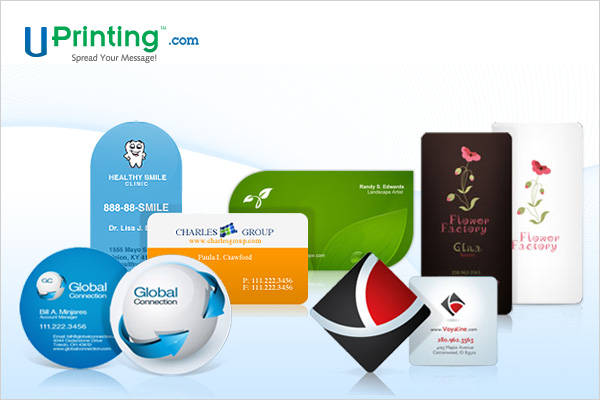
If you want to get some eco-friendly business cards, you have several options. You can print business cards online with UPrinting and other companies that have eco-friendly options. Look for recycled paper (rather than virgin paper) and soy-based inks (rather than petrochemically derived inks). If the company you order from has post-consumer recycled paper, that’s even better.
Some marketing experts will tell you that slightly thicker paper will leave a more lasting impression, the extra weight conveying a sense of importance to your potential client. I’m not sure I’ve seen any actual evidence of this (I couldn’t find a study on this), but I’d suggest 20# or greater paperweight, so as to avoid looking *really* flimsy, but beyond that, I’m not sure there’s extra benefit to going thicker, and it would cost you more as well as being less eco-friendly to do so anyway.
Check out more sustainable business strategies here!