
 The green economy shows signs of rebounding faster than others shaken by the global financial turmoil. There are several indicators pointing to the fact.
Government Guaranteed Revenues for Large Renewable Energy Players
Unlike other industries, renewable energy has government-guaranteed revenues. However it is likely that as the credit crunch plays out, the re-bounders will be big utilities who are not reliant on banks for short term loans rather than start-ups who do.
“Even if utilities do have to borrow, they can do so cheaply as government-regulated businesses with guaranteed rates of return which can pass on costs to consumers”, said analyst Pavel Mulchanov at Raymond James & Associates in Houston who hints that the larger wind and solar companies might be recession proof even though their stocks have been yo-yo-ing.
Tax Credits For Wind and Solar Energy Industries
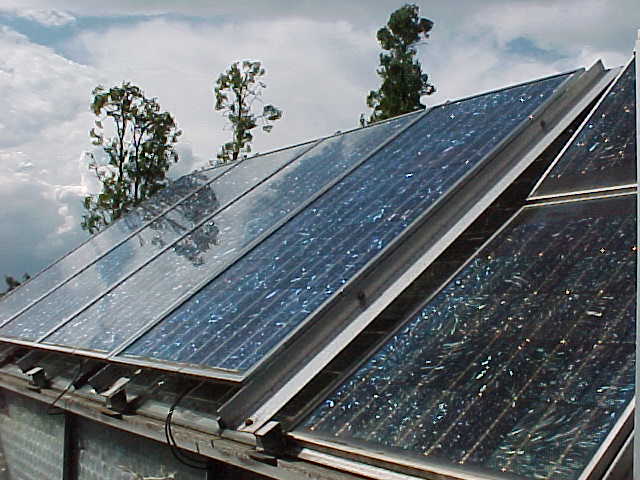
The highly contentious $700 billion bailout was finally signed into law on October 3rd after a series of revisions. Known officially as the Emergency Economic Stabilization Act of 2008, it includes production and investment tax credits for the wind and solar energy industries. About 60,000 Americans are already employed by the solar energy industry, the extension of tax credits will further help to create thousands of jobs while providing clean, affordable, carbon-free energy to citizens. Clearly a win-win situation.
4.2 Million Green Jobs by 2038
According to a study released last week for the U.S. Conference of Mayors, the U.S. economy now has about 750,000 green jobs that include renewable energy or green engineering, legal or research support. As the economy recovers and focuses on developing energy efficiency and alternative fuels, it can generate 4.2 million new “green” jobs in the next 30 years.
Non Green Companies Weigh In: Google Unveils a Plan For Cleaner Energy
Google Inc. has decided to fund green technology and leverage its brand power to lobby for policy change. The world famous web search company plans to wean the United States off burning coal and oil for power by 2030, and cut oil use for cars by 40 percent. That will cost trillions of dollars, but Google believes it should ultimately save money.
What will the U.S. Economy look like in the foreseeable future? Are we entering a green revolution? Did we actually manage to achieve more than a $700 billion bailout for the environment over the long term?
Photo Credit: mrra.gov.mt/pics/

Do we chose to engage in a “Race to the Bottom” or Sustainable Practices that will rebuild America.
Two Points:
Manufacture in America
Energy Independence
Let’s get to work… we are the one’s
Shh….www.otoyk.com
Do we chose to engage in a “Race to the Bottom” or Sustainable Practices that will rebuild America.
Two Points:
Manufacture in America
Energy Independence
Let’s get to work… we are the one’s
Shh….www.otoyk.com
The actual “turbo-capitalist” crisis, whose end and global consequences are unpredictable, could constitute an opportunity to the construction of a new alternative economic model firmly based on the environmental, economic and social domains, with new concepts of “growth” – not just a “green“ recovery based on this capitalist model, but a effective Low-Carbon Economy model.
The actual “turbo-capitalist” crisis, whose end and global consequences are unpredictable, could constitute an opportunity to the construction of a new alternative economic model firmly based on the environmental, economic and social domains, with new concepts of “growth” – not just a “green“ recovery based on this capitalist model, but a effective Low-Carbon Economy model.
I happen to deeply agree with the wisdom of Tom Friedman (that we cannot consume of way out of this mess and “Have you ever been to a revolution where nobody gets hurt?”). The fact is that the current economic conditions will cause a lot of companies to close their doors (websites too), and will die off altogether due to lack of understanding the competitive landscape. Those that will fight to stay alive will need to figure out — What’s Next?
I believe that the New Green Economy will include the Rise of Green Real Estate Markets paired with the continued success of Cleantech, Clean Energy Markets, and large scale shifts toward Clean Transportation, and the Greening of the IT Industries (plus a fourth quarter of record investment!!), which will lead to a boom in “American Made” Green Collar Jobs and the creation of new wealth. The trick is: “who will get it right??” Execution makes all the difference for most of these opportunities and green investors need to pay more attention to the items that management claim they can achieve.
Have you ever heard of the Eco Investment Club before? The Club has hosted several high impact, educational meetings that cover these “newly hot topics” such as: “The Economic State of Green Building” with Guest Speaker Harvey Bernstein, Vice President of Industry Analytics, Alliances and Strategic Initiatives for McGraw-Hill Construction and Hosted by Citi Smith Barney’s Bruce Kahn, and the First Annual “Green Leaders Week”, which was a week-long buffet of events for investors, who were interested in getting face-to-face time with the Green Business Leaders of Southern California. The events of this highly successful week were designed to give Accredited and Institutional Investors, who were interested in getting a first-hand look inside the minds of Cleantech leaders, the opportunity to witness operations of some of the fastest growing companies by attending a series of “open houses”, starting with Envirepel Energy, Inc., a clean energy (BioMass) company in Vista, CA.
And as a special surprise: Ask Oren Jaffe, Co-Founder of EcoTuesday.com, your toughest questions on Nov 5th, 2008, as the Eco Investment Club attempts to provide direction and positive outlook for green investors and business leaders seeking answers before creating more Green Collar Jobs! The event is called, “What’s Next For The Green Economy??” Submit your questions at [email protected] and join the webinar at:https://www2.gotomeeting.com/register/124526391 (Click here to register or learn more)
I happen to deeply agree with the wisdom of Tom Friedman (that we cannot consume of way out of this mess and “Have you ever been to a revolution where nobody gets hurt?”). The fact is that the current economic conditions will cause a lot of companies to close their doors (websites too), and will die off altogether due to lack of understanding the competitive landscape. Those that will fight to stay alive will need to figure out — What’s Next?
I believe that the New Green Economy will include the Rise of Green Real Estate Markets paired with the continued success of Cleantech, Clean Energy Markets, and large scale shifts toward Clean Transportation, and the Greening of the IT Industries (plus a fourth quarter of record investment!!), which will lead to a boom in “American Made” Green Collar Jobs and the creation of new wealth. The trick is: “who will get it right??” Execution makes all the difference for most of these opportunities and green investors need to pay more attention to the items that management claim they can achieve.
Have you ever heard of the Eco Investment Club before? The Club has hosted several high impact, educational meetings that cover these “newly hot topics” such as: “The Economic State of Green Building” with Guest Speaker Harvey Bernstein, Vice President of Industry Analytics, Alliances and Strategic Initiatives for McGraw-Hill Construction and Hosted by Citi Smith Barney’s Bruce Kahn, and the First Annual “Green Leaders Week”, which was a week-long buffet of events for investors, who were interested in getting face-to-face time with the Green Business Leaders of Southern California. The events of this highly successful week were designed to give Accredited and Institutional Investors, who were interested in getting a first-hand look inside the minds of Cleantech leaders, the opportunity to witness operations of some of the fastest growing companies by attending a series of “open houses”, starting with Envirepel Energy, Inc., a clean energy (BioMass) company in Vista, CA.
And as a special surprise: Ask Oren Jaffe, Co-Founder of EcoTuesday.com, your toughest questions on Nov 5th, 2008, as the Eco Investment Club attempts to provide direction and positive outlook for green investors and business leaders seeking answers before creating more Green Collar Jobs! The event is called, “What’s Next For The Green Economy??” Submit your questions at [email protected] and join the webinar at:https://www2.gotomeeting.com/register/124526391 (Click here to register or learn more)